How Do I Choose the Right Batch Capacity?
Start with the smallest and largest batches you need to produce. Then check whether the operating liquid level suits the agitator, homogenizing head and product-transfer path.
| CreamMix family |
Structure |
Listed capacities in the reference tables |
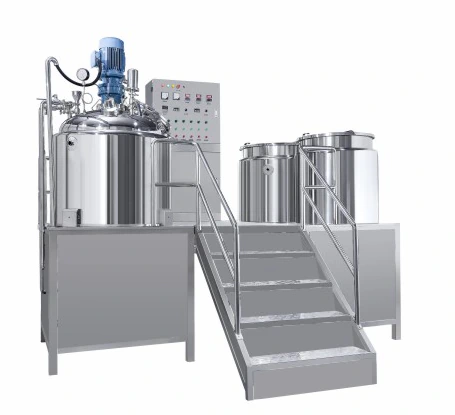
| Lab | Hydraulic lifting | 5 L and 10 L |
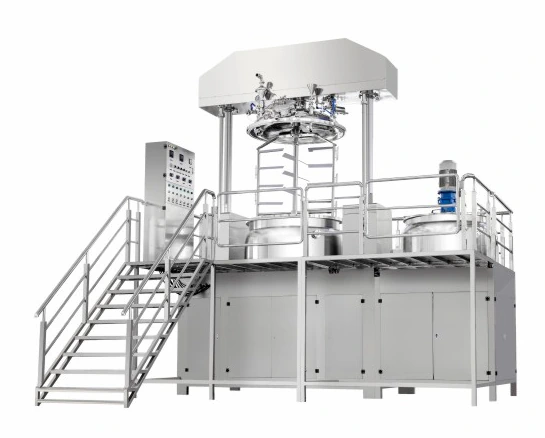
| Pro | Hydraulic lifting | 50–2000 L |
| Ultra | Fixed-type | 100–3000 L |
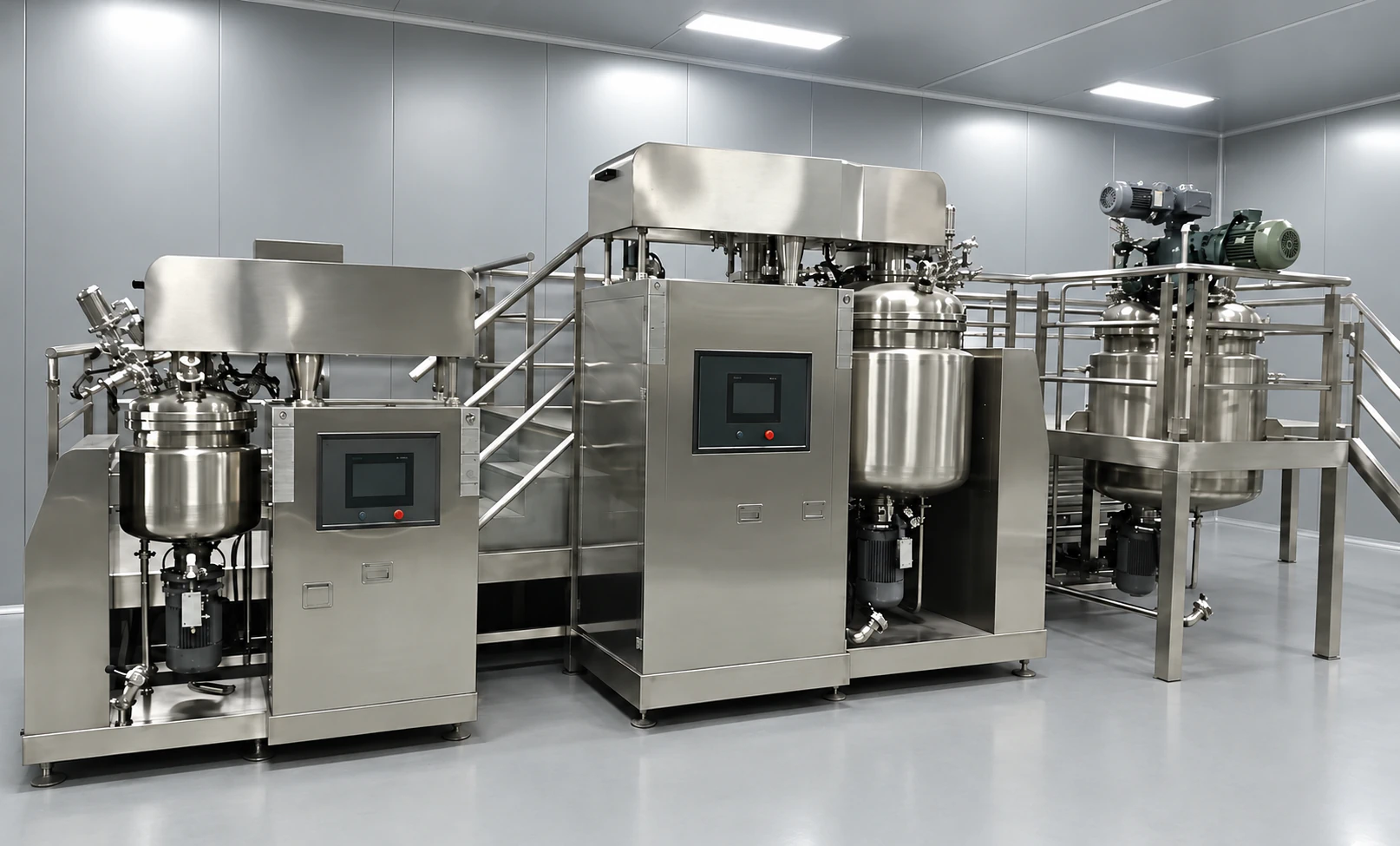
Use your smallest and largest planned batches to select the working range. Check operating level, product density, ingredient additions and discharge needs alongside the listed batch capacity, so one mixer can serve the batches you actually make.
What Is the Difference Between Vacuum and Homogenization?
Vacuum processing
Addresses entrained air and can assist material introduction in an appropriate configuration. Assess it around an identified air-removal or ingredient-handling requirement and the formulation’s suitability for the intended conditions.
Rotor-stator homogenization
Applies localized mechanical shear. Its contribution depends on the formulation, homogenizer geometry, material flow and processing conditions.
CreamMix Lab and Pro offer listed homogenizer speeds of 0–3000 r/min; CreamMix Ultra lists 1440/2880 r/min. Select speed together with homogenizer geometry, material flow and the formulation’s target texture.
Can a Laboratory Process Be Transferred Directly to Production?
Use CreamMix Lab to study ingredient addition, usable batch range and access during formulation trials. Record the process conditions that will guide the production configuration.
For a cream that thickens during cooling, assess the complete sequence:
Hot-phase circulation
→
Material movement during cooling
→
Final discharge
Record the addition sequence, temperature profile and product characteristics that production needs to reproduce. Review geometry, working level, circulation and heat transfer during scale-up, then confirm the production settings through suitable process trials.
What Should I Compare for Cleaning and Changeovers?
Use the complete product-contact path as your checklist:
- Cover, agitator and homogenizing assembly.
- Seals, valves and discharge connections.
- Transfer piping and any external circulation loop.
- Access for inspection, disassembly and reassembly.
Hydraulic lifting opens access above the vessel for inspection and cleaning. For frequent changeovers, review residue removal, disassembly points and access to seals and valves. Include any cleaning-in-place requirements in the equipment layout and procedure.
What Determines Heating and Cooling Time?
Batch quantity
Formulation properties
Starting and target temperatures
Available utilities
Heat-transfer area and material movement also affect the thermal cycle. Cooling deserves particular attention when viscosity increases as the batch approaches its discharge temperature.
Compare electric and steam heating against the services available at your site. Review heating and cooling capacity alongside the batch quantity, viscosity and temperature targets to plan a practical thermal cycle.
What Should a Mixer Quotation Include?
Compare quotations using the same equipment boundary:
| Package boundary |
Scope to identify |
| Main mixer | Vessel, agitation, homogenization, vacuum equipment and controls |
| Phase preparation | Any oil/water vessels and their heating or transfer arrangements |
| Connected process | Holding, pumping, piping and interfaces with receiving equipment |
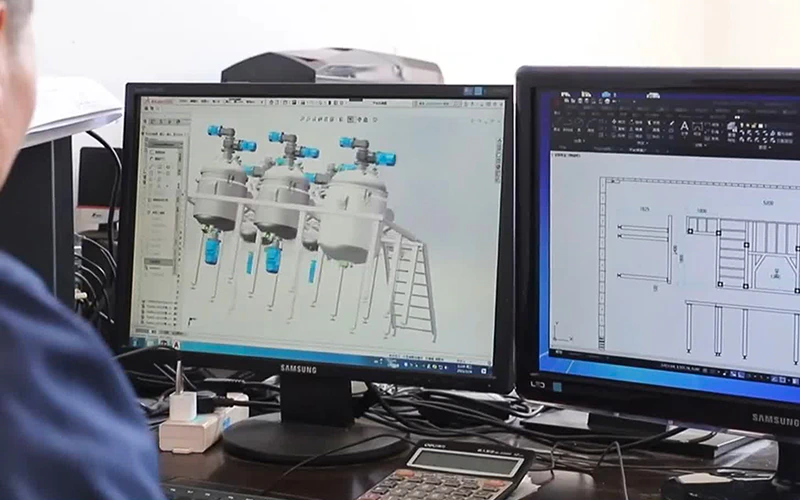
Contact materials, cleaning provisions, instrumentation and installation requirements can also change the package. KOZMAG provides one point of contact for project communication. Installation arrangements, training, acceptance requirements, documentation and service responsibilities are defined for the specific project.